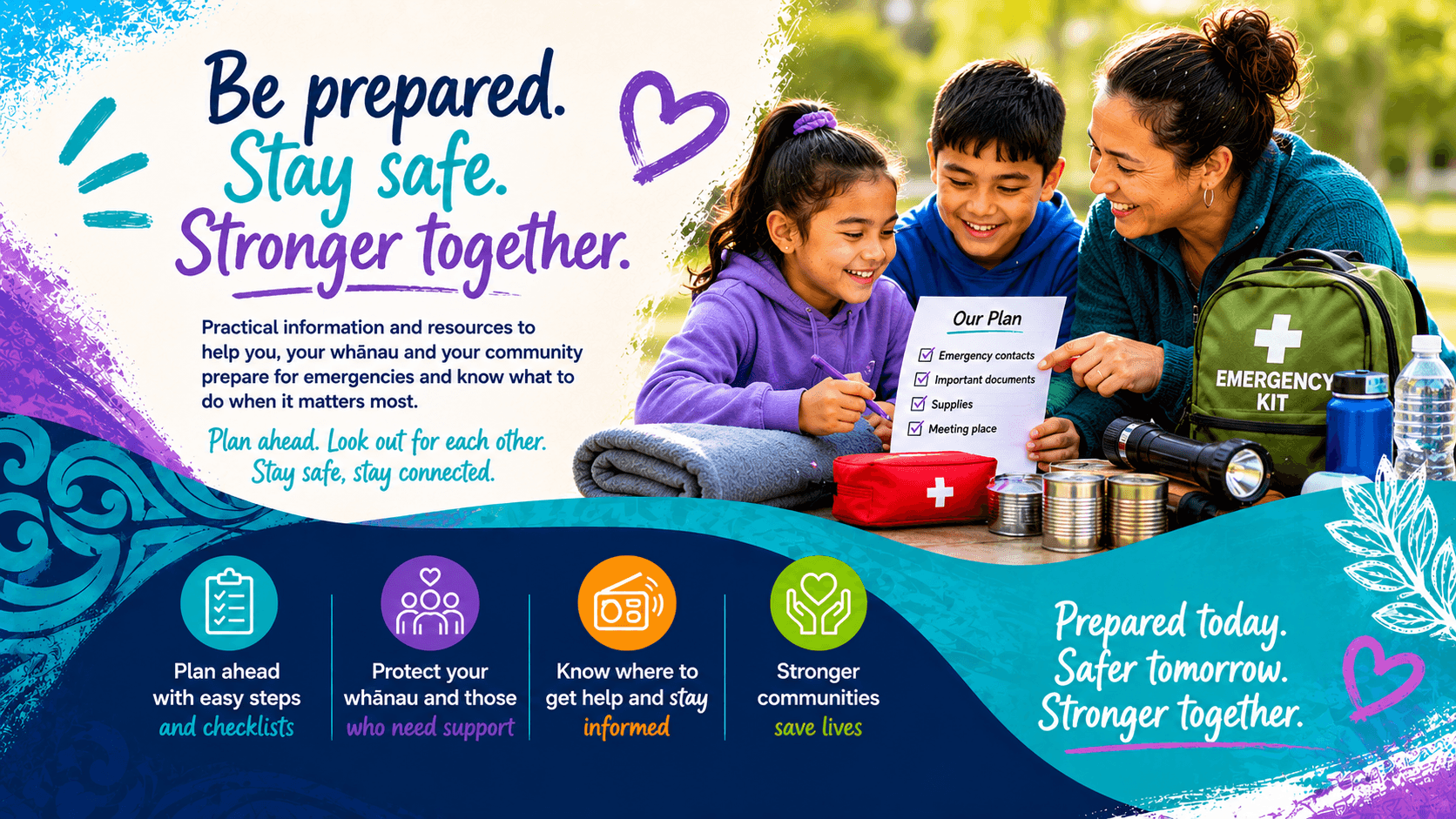
Preparing for an Emergency
Emergency preparation is important for everyone, but disabled people, neurodivergent individuals and families with additional support needs may face extra challenges during emergencies, evacuations and unexpected events.
Planning ahead can reduce stress and improve safety
Emergencies can happen suddenly and may include storms, flooding, earthquakes, fires, power outages or situations where families need to leave home quickly. Having a plan in place ahead of time can help reduce confusion, lower stress and improve safety during difficult situations.
Emergency preparation can be especially important for people who rely on medication, medical equipment, mobility devices, communication supports, sensory regulation tools or structured routines.
Things families may want to consider
Every family and every disability experience is different, so emergency planning should reflect individual needs and practical daily supports.
Medical & support needs
Consider medications, medical information, charging equipment, communication tools, mobility aids and emergency contacts.
Sensory & emotional support
Familiar comfort items, headphones, calming tools, visual schedules and sensory supports may help reduce anxiety during emergencies.
Communication planning
Some people may communicate differently during stressful situations. Planning communication supports ahead of time can be helpful.
Emergency kits and accessible planning
Emergency kits may include food, water, medications, first aid supplies, torches, batteries, charging devices, copies of important documents and comfort items that support regulation and wellbeing.
Some families may also choose to prepare visual checklists, sensory kits or emergency information sheets that explain communication, mobility or support needs to emergency responders or support people.
Supporting children during emergencies
Emergencies can feel overwhelming and unpredictable for children. Calm explanations, familiar routines where possible and simple communication can help children feel safer during stressful situations.
Some children may become overwhelmed by loud sounds, crowded spaces, sudden changes or sensory overload during emergencies. Understanding sensory experiences and preparing supportive strategies ahead of time may help reduce distress.
Preparation supports confidence and safety
Inclusive emergency planning helps ensure disabled people, children and families are considered, supported and included during emergencies and unexpected events.
By planning ahead and understanding individual needs, communities can become safer, calmer and more inclusive for everyone.