Supported Living & Respite NZ
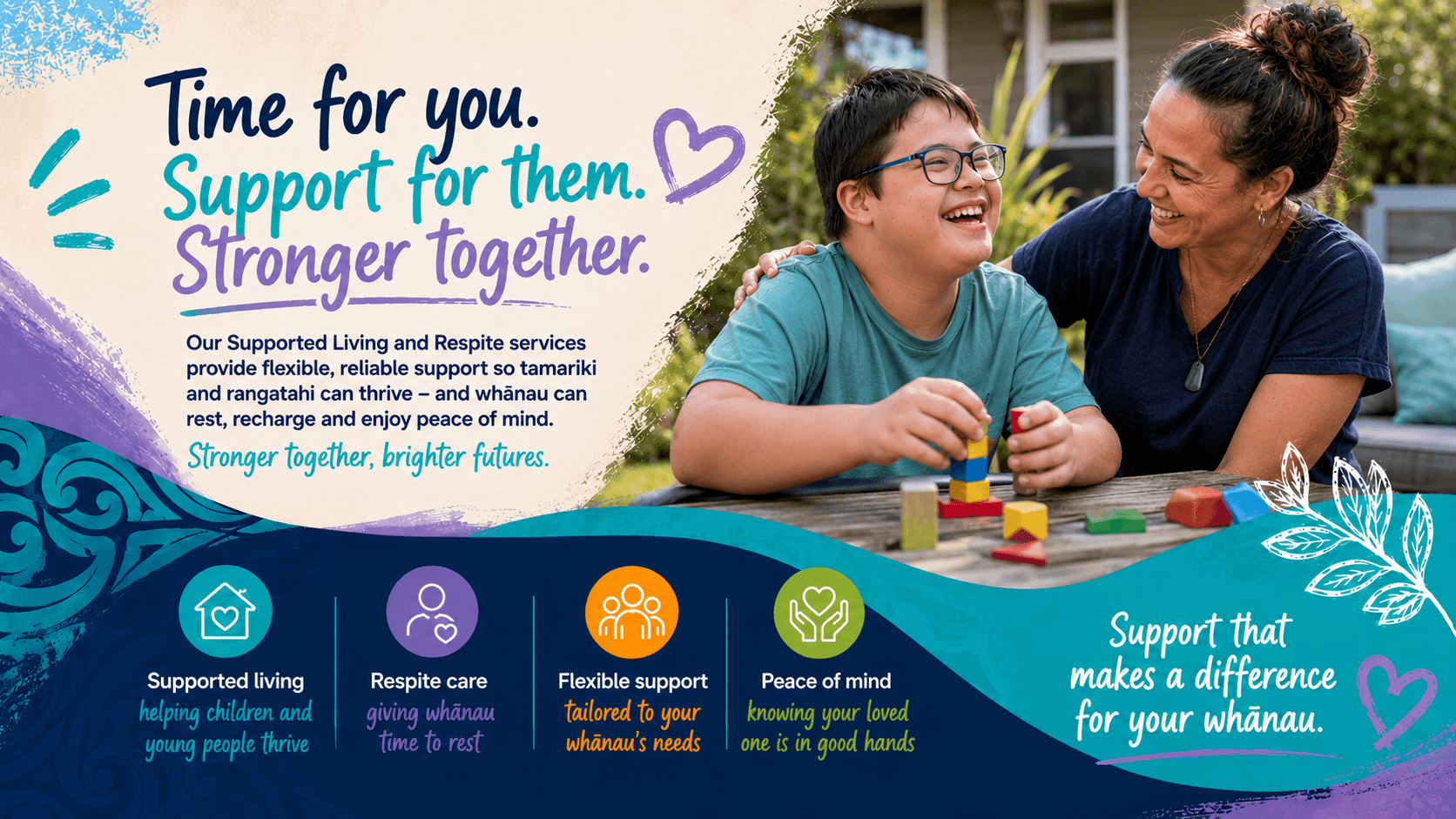
Supported living and respite services can help disabled people, families and whānau access practical support, build independence and take breaks when ongoing care responsibilities become demanding.
Support should fit real life
Every person and family has different support needs. Some disabled people may need help with daily living, community participation, routines, communication, personal care or building independence. Families and carers may also need planned breaks, emergency support or short-term respite.
Supported living and respite services should be flexible, respectful and centred around the person, their goals, their family and their everyday life.
Types of support people may need
Support can look different depending on age, disability, family situation, location, funding and personal goals.
Supported living
Practical support that helps disabled people live more independently, build daily routines and participate in community life.
Respite care
Short-term support that gives families, carers and whānau time to rest, recover or manage other responsibilities.
Community participation
Support that helps people connect with activities, learning, friendships, recreation and everyday community opportunities.
Why respite matters
Caring responsibilities can be rewarding, but they can also be exhausting when families do not get enough support. Respite can give carers time to rest, attend appointments, spend time with other family members or simply recharge.
Good respite should not feel like a last resort. It should be part of a supportive system that recognises the wellbeing of disabled people, families and carers together.
Person-centred support
Supported living works best when the disabled person is listened to and included in decisions about their own life. Support should respect identity, communication, culture, preferences, routines and goals.
For families and whānau, clear information and trusted providers can make it easier to understand options, ask questions and find support that feels safe and appropriate.
Everyone deserves support that respects their life
Supported living and respite are important parts of inclusion because they help people participate, families keep going and communities become more supportive.
Inclusive World NZ supports practical information and lived-experience understanding that helps disabled people, families and carers feel less alone when looking for support.