Educators & Schools
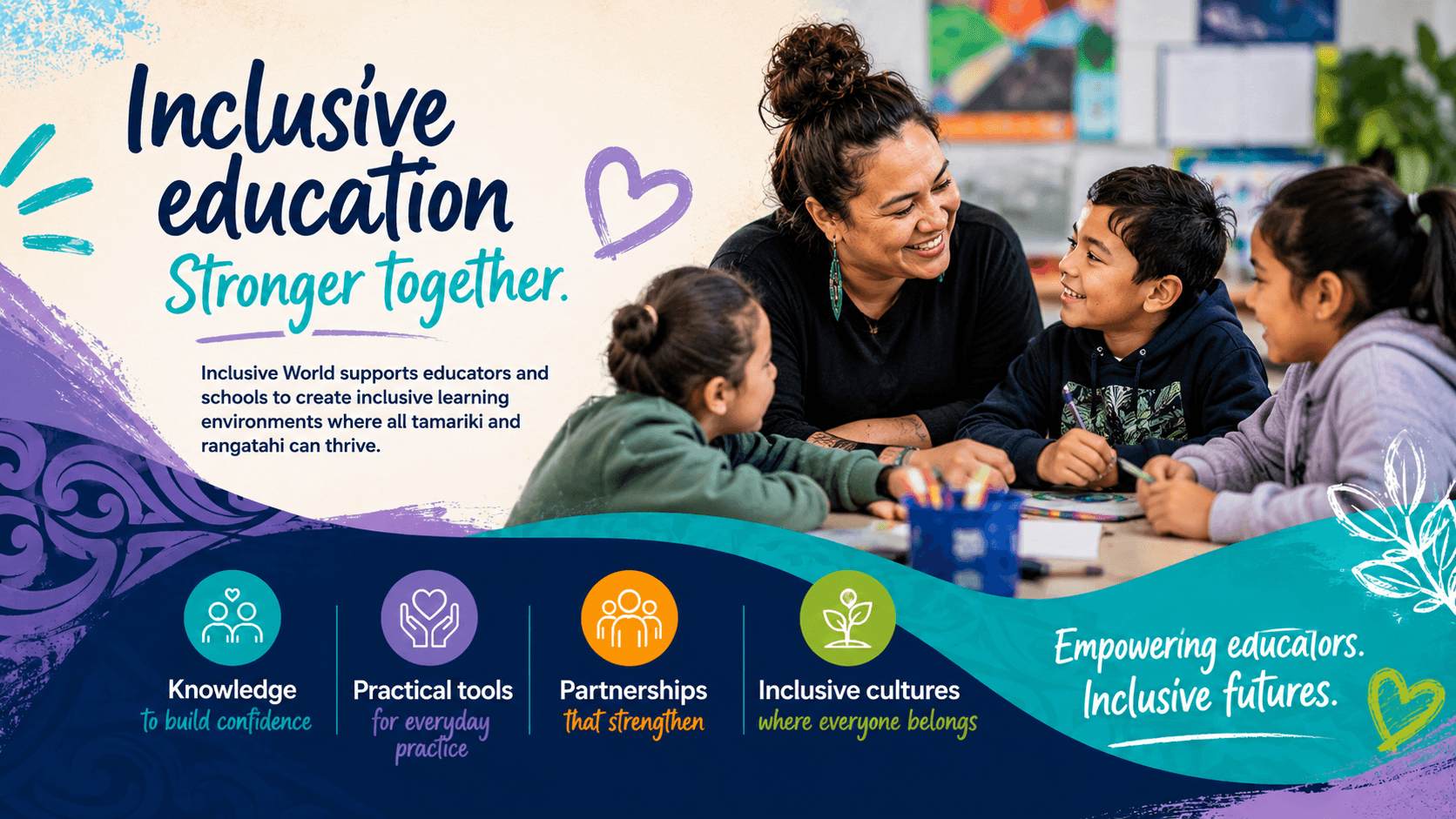
Educators, schools and learning communities play an important role in helping children feel included, respected and valued. Inclusive education helps create environments where diversity is recognised as a strength and every learner has opportunities to participate and succeed.
Inclusive education benefits everyone
Inclusive education is about more than physical access. It involves creating learning environments where students’ identities, cultures, languages, abilities and lived experiences are recognised and respected.
In Aotearoa New Zealand, inclusive education is guided by principles that support participation, belonging and equitable learning opportunities for all ākonga. Inclusive practices can also help strengthen empathy, understanding and positive relationships across diverse school communities.
Supporting diverse learners
Students learn and communicate in different ways. Inclusive learning environments recognise that diversity may include disability, neurodiversity, culture, language, communication styles, sensory needs and different ways of engaging with learning.
Inclusive classroom culture
Positive classroom environments help students feel welcomed, respected and safe to participate in learning and social activities.
Accessible learning tools
Flexible teaching approaches, visual supports, audiobooks, sensory tools and assistive technology can help reduce barriers to learning.
Partnership with whānau
Families and whānau bring important lived experience and knowledge that can help educators better understand and support learners.
A multicultural and globally connected future
New Zealand is a multicultural society with growing cultural diversity across schools and communities. Inclusive education helps prepare children to learn alongside people from different cultures, backgrounds, identities and lived experiences.
Inclusive World NZ is based in Aotearoa New Zealand, but our vision is global. We believe schools and educators everywhere can help shape a future where disability, difference and diversity are understood as natural parts of human life.
Why representation matters
Positive representation in stories, classroom resources and learning environments can help children feel seen and included. It can also help reduce stigma, encourage empathy and support respectful understanding between students.
Inclusive resources can support educators who want practical ways to introduce conversations around disability, accessibility, communication, neurodiversity and belonging within everyday learning.
Helping create inclusive learning communities
Inclusive World NZ supports educators, schools and learning communities with resources that encourage understanding, participation and belonging for all learners.
From classrooms in Aotearoa New Zealand to learning communities around the world, inclusion starts when children see diversity respected, supported and represented in everyday life.